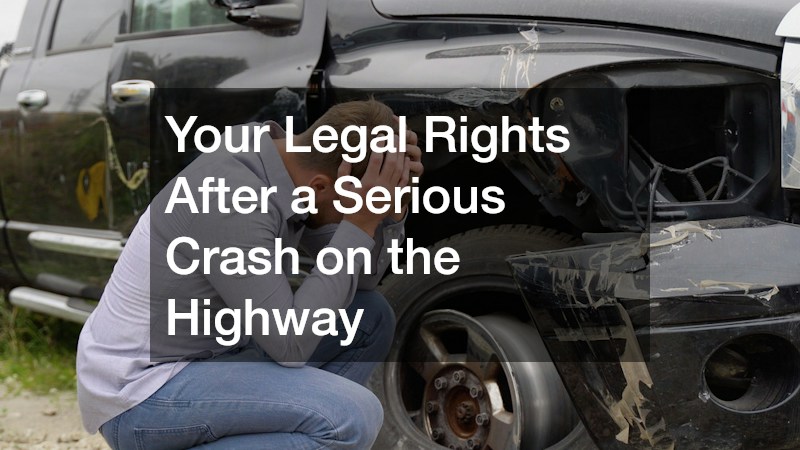
A serious highway crash can turn your life upside down in a matter of seconds, leaving you with injuries, medical bills, and a pile of confusing paperwork. In the chaotic aftermath, it is easy to feel overwhelmed and unsure of what steps actually protect your health and your wallet. Understanding your legal rights early can make the difference between a fair recovery and a financial burden that lingers for years.
This guide breaks down what you need to know so you can move forward with confidence.
Steps to Take Immediately After the Collision
What you do in the first few minutes and hours after a crash can significantly affect both your health and any future claim. Safety comes first, so check yourself and passengers for injuries before assessing the vehicles involved. If your car is drivable and blocking traffic, move it to the shoulder; if it isn’t, turn on your hazard lights and stay a safe distance from moving vehicles until help arrives. Calling emergency services ensures a police report is generated, which becomes an important piece of documentation later.
When officers arrive, give a factual, brief account of what happened without guessing at fault or apologizing, since these statements can be quoted back in insurance disputes. Ask for the responding officer’s name and badge number, and note the report number so you can request a copy within a few days. Even if injuries seem minor at the scene, adrenaline can mask pain that shows up hours or days afterward. Conditions like whiplash, concussions, and soft-tissue damage often don’t present symptoms until 24 to 72 hours later, so a prompt medical evaluation creates a documented link between the crash and your injuries. Waiting too long to see a doctor can also give insurance companies grounds to argue your injuries weren’t caused by the collision.
While waiting for help or immediately after, use your phone to photograph vehicle damage, license plates, skid marks, road conditions, and any visible injuries. Collect names and contact information for witnesses, since their independent accounts can be valuable if the other driver later disputes what happened. These small steps, taken calmly and methodically, can make a meaningful difference to your health and to the strength of any claim you pursue later.
- Move to a safe location if possible—such as the shoulder or nearest exit—and turn on hazard lights to warn oncoming traffic
- Call 911 to report the crash, request medical assistance, and ensure a police report is filed, even if injuries seem minor
- Avoid admitting fault or making statements about who caused the crash; stick to factual descriptions when speaking with officers
- Exchange insurance and contact information with other drivers, including full names, phone numbers, license plate numbers, and insurance policy details
- Take photos of vehicle damage, license plates, road conditions, skid marks, and any visible injuries from multiple angles
- Note the exact time, location, and weather conditions, as these details can matter later for legal claims
- Get names and numbers of any witnesses at the scene, since their accounts may support your version of events
- Seek medical evaluation promptly, even without obvious injuries, since some symptoms like whiplash or concussions surface hours or days later
Documenting Evidence at the Scene

Strong documentation can make or break a claim, especially when fault is disputed or injuries are severe. Photographs of skid marks, debris, and vehicle positioning help reconstruct how the crash happened before vehicles are moved or repaired. Weather and lighting conditions at the time of the crash are also worth noting, since they can influence how liability is determined. Written notes made soon after the event tend to be more accurate than memories recalled weeks later during an insurance interview.
- Photograph all vehicles from multiple angles
- Record road signage, traffic signals, and lane markings
- Note the time, date, and weather conditions
- Save copies of the police report once available
- Keep a written timeline of events while details are fresh
Understanding Fault and Liability on Highways
Highway crashes often involve higher speeds, multiple vehicles, and complex traffic patterns, which can make determining fault more difficult than in a typical fender bender. Liability may rest with one driver, be shared between several parties, or even extend to a government entity responsible for poor road maintenance or signage. Comparative negligence laws in many states allow injured parties to recover damages even if they were partially at fault, though the amount awarded may be reduced accordingly. Insurance adjusters will investigate the crash closely, and their initial assessment of fault is not always the final word.
It is common for insurance companies to attempt to shift blame toward the injured party to reduce their payout obligations. This is one reason many people choose to consult a personal injury lawyer before accepting any settlement offer or signing a fault admission. A clear understanding of how liability works on highways helps you avoid accepting responsibility you do not actually bear.
Seeking Medical Treatment and Keeping Records
Prompt medical care is not just about your health; it also creates a documented link between the crash and your injuries. Delaying treatment gives insurance companies room to argue that your injuries were caused by something other than the collision. Even soft tissue injuries, whiplash, or concussions that seem minor at first can develop into long-term complications if left untreated. Following through with every recommended follow-up appointment, physical therapy session, or specialist referral strengthens your medical record.
- Visit an emergency room or urgent care immediately after the crash
- Follow up with your primary care physician within a few days
- Keep all discharge papers, prescriptions, and imaging results
- Track symptoms and pain levels in a daily journal
- Save receipts for medications, mobility aids, and travel to appointments
Dealing With Insurance Adjusters and Settlement Offers
Insurance companies are businesses, and their goal is to resolve claims for as little money as possible. Adjusters may call soon after the crash, sounding friendly and helpful, but their questions are often designed to gather statements that can later be used to minimize your claim. It is wise to avoid giving a recorded statement until you fully understand the extent of your injuries and financial losses. Many injury victims find that early settlement offers fall far short of covering long-term medical costs, lost wages, and pain and suffering.
Before accepting any offer, it helps to have someone review the terms who understands how these calculations typically work. A careful review should confirm whether a proposed settlement accounts for future medical needs, not just current bills, and whether it reflects the full impact of the crash on daily life and earning capacity. Taking time to negotiate, rather than rushing to close the claim, often results in a more complete recovery for the injured party.
Special Considerations for Crashes Involving Large Trucks
Collisions involving tractor-trailers or commercial vehicles carry unique legal complexities compared to standard car accidents. Federal trucking regulations govern driver hours, vehicle maintenance, and cargo loading, and violations of these rules can establish negligence. Multiple parties may share liability, including the truck driver, the trucking company, a cargo loading company, or even a parts manufacturer if equipment failure contributed to the crash. Because of these layered responsibilities, evidence such as electronic logging device data and maintenance records often needs to be preserved quickly before it is lost or overwritten.
Given the scale of injuries often seen in truck crashes, working with a truck accident lawyer who understands federal trucking regulations can be critical to identifying every liable party. These cases frequently involve larger insurance policies and more aggressive legal defense teams representing trucking companies. Having knowledgeable guidance early on helps ensure that evidence is preserved and that all potentially responsible parties are held accountable.
Calculating the Full Value of Your Claim
Many crash victims underestimate what their claim is actually worth because they focus only on immediate medical bills and vehicle repair costs. A complete valuation should also account for lost income, reduced earning capacity, and the cost of future medical care if injuries result in long-term limitations. Pain and suffering, emotional distress, and loss of enjoyment of life are also compensable in many cases, even though they are harder to quantify. Working with financial and medical experts can help ensure that no category of damages is overlooked.
- Current and future medical expenses
- Lost wages and diminished earning potential
- Property damage and rental vehicle costs
- Pain, suffering, and emotional distress
- Long-term care or rehabilitation needs
Knowing When to Consult Legal Representation
Not every fender bender requires a lawyer, but serious highway crashes involving significant injuries, disputed fault, or multiple vehicles often benefit from professional guidance. A personal injury attorney can handle communications with insurance companies, gather necessary evidence, and calculate damages you might not think to include on your own. An experienced injury lawyer can also anticipate the tactics insurance adjusters use to minimize payouts, giving you a stronger position from the start. Many attorneys offer free initial consultations, which means you can learn about your options without any upfront financial commitment. Statutes of limitations vary by state, so waiting too long to seek advice can jeopardize your ability to file a claim at all.
The earlier you reach out for guidance, the more evidence and witness testimony can be preserved in your favor. Legal representation also levels the playing field when facing insurance companies and their teams of adjusters and defense attorneys. Ultimately, having someone advocate specifically for your interests can relieve stress during an already difficult recovery period.
Conclusion
Recovering from a serious highway crash takes time, patience, and a clear understanding of the rights available to you. By documenting the scene, seeking prompt medical care, and carefully reviewing any settlement offers, you put yourself in a stronger position to recover what you are truly owed. If you are feeling uncertain about the claims process or facing pushback from an insurance company, reaching out for professional legal guidance is a reasonable next step. Taking action now can protect both your health and your financial future.